What Happens During a Dental Implant Consultation?
If you are thinking about replacing a missing tooth, you may be wondering what happens at a dental implant consultation and whether implant treatment could be suitable for you.
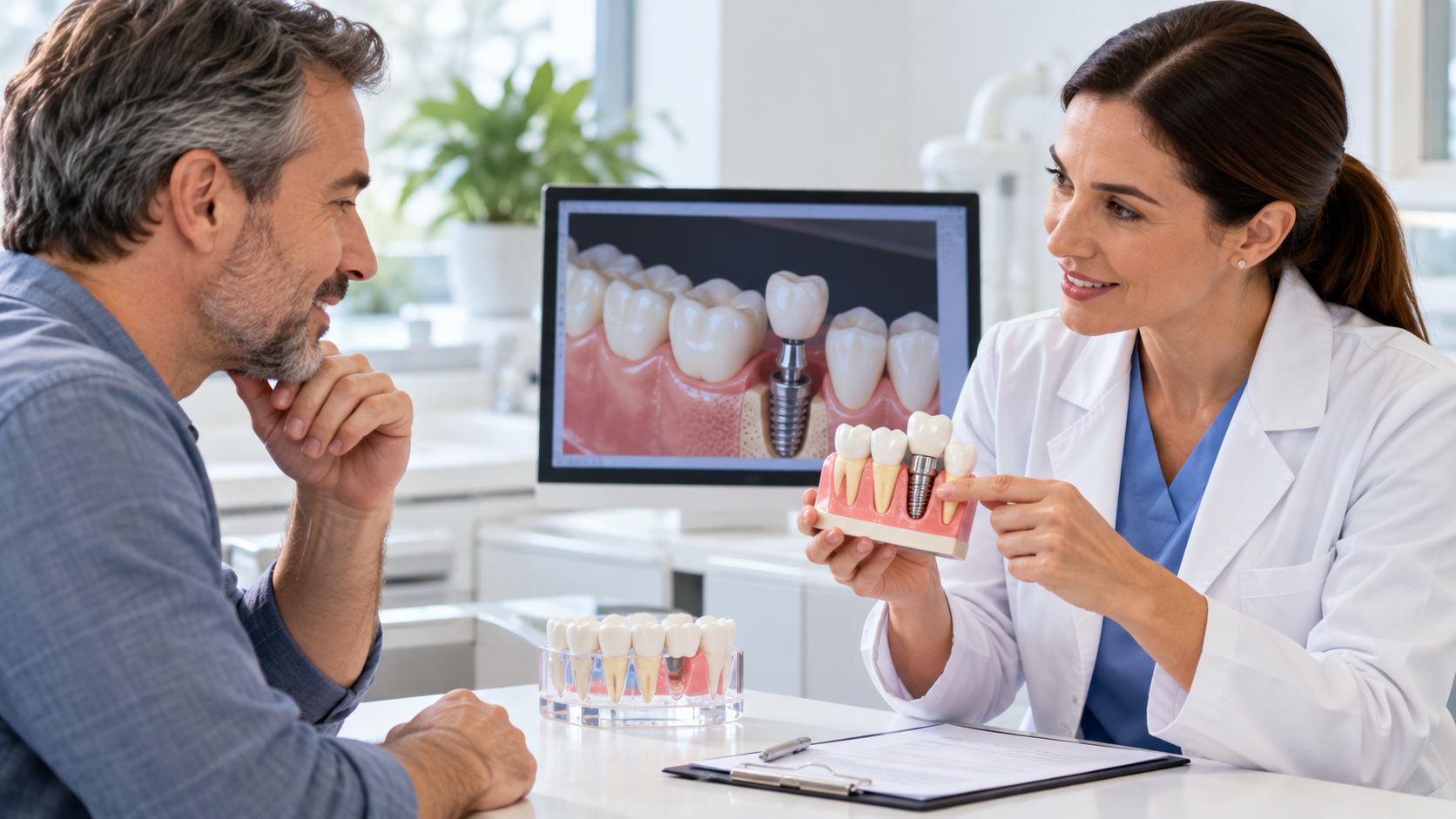
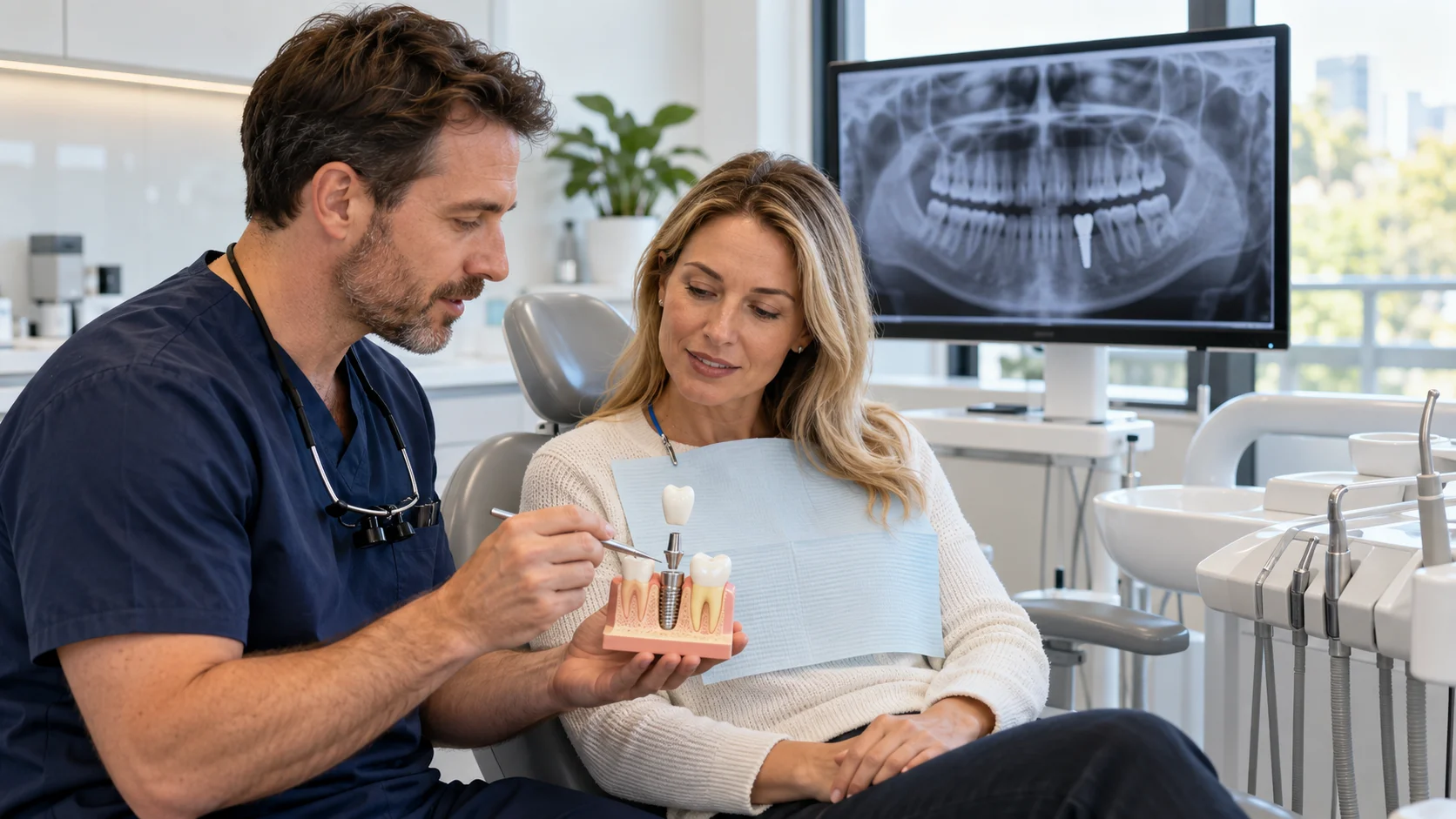
A dental implant consultation is not the same as starting treatment. It is the first step where your dentist assesses your mouth, asks about your health, reviews your goals and explains what options may be available. For many patients, this appointment is helpful because it turns a big decision into something clearer and easier to understand.
At Revesby Dental Centre, a dental implant consultation allows your dentist to complete an implant assessment and discuss whether dental implants may be appropriate for your needs. Not every patient is suitable for implant treatment, and not every missing tooth needs to be replaced the same way. That is why the consultation matters.
Here is what you can usually expect during the appointment.
Why a Dental Implant Consultation Is Important
Dental implants are used to replace one or more missing teeth in suitable patients. They involve placing a small implant into the jawbone, which can later support a crown, bridge or denture depending on the case.
Because implant treatment involves the teeth, gums, jawbone, bite and overall health, your dentist needs to understand the full picture before making any recommendations.
A consultation helps answer questions such as:
- Is there enough bone to support an implant?
- Are the gums healthy enough for treatment?
- Are there other dental concerns that need attention first?
- Is the missing tooth area suitable for an implant?
- Would another option be more appropriate?
- What steps may be involved?
- What might the timing and cost look like?
This appointment is about careful planning. It gives your dentist the chance to check whether implant treatment may be suitable, and it gives you the opportunity to understand the process before making a decision.
Step 1: Your Dentist Will Ask About Your Concerns
The consultation usually begins with a conversation.
Your dentist may ask why you are considering a dental implant, how long the tooth has been missing, whether you currently wear a denture and what you would like to improve.
Some patients are mainly concerned about chewing. Others are bothered by a visible gap. Some want to know whether a loose denture can be made more stable. Others may have been told a tooth cannot be saved and want to understand replacement options.
This part of the appointment helps your dentist understand what matters to you.
It also helps shape the discussion. A person missing one front tooth may need a different plan from someone missing several back teeth. Someone who has had a gap for many years may need a different implant assessment compared with someone who has recently lost a tooth.
Step 2: Your Medical History Will Be Reviewed
Your general health can affect dental implant planning.
Your dentist may ask about medical conditions, medicines, allergies, previous surgeries, smoking or vaping, diabetes, gum disease history and any relevant health concerns.
This is not just routine paperwork. Some health factors may affect healing, implant suitability or the timing of treatment. For example, certain medical conditions or medications may need to be considered before any surgical procedure is planned.
Providing accurate information during this part of the consultation is important. Even details that seem unrelated may help your dentist plan your care more safely.
If needed, your dentist may recommend speaking with your GP or medical specialist before proceeding. This does not always mean treatment cannot happen. It means your care needs to be planned with the appropriate medical information.
Step 3: Your Teeth and Gums Will Be Checked
The next part of the consultation usually involves a dental examination.
Your dentist will assess your teeth, gums, bite and the area where the tooth or teeth are missing. They may check whether nearby teeth are healthy, whether there are signs of decay, whether existing fillings or crowns need attention and whether the gums are inflamed.
Gum health is especially important.
Dental implants need healthy surrounding tissues. If there are signs of active gum disease, bleeding gums or infection, these may need to be managed before implant treatment is considered.
Your dentist may also check how your teeth come together when you bite. Bite pressure can affect implant planning, especially if you grind or clench your teeth.
The dental team at Revesby Dental Centre can assess your oral health and discuss any dental concerns that may need attention before implant treatment.
This is why an implant suitability check is more than simply looking at the gap. The whole mouth needs to be considered.
Step 4: The Missing Tooth Area Will Be Assessed
Your dentist will look closely at the area where the implant may be placed.
They may assess:
- The space available for the implant
- The position of nearby teeth
- The shape of the gum
- The amount of visible bone and tissue
- The way your upper and lower teeth meet
- Whether the gap has changed over time
When a tooth has been missing for a while, the surrounding teeth can sometimes shift. The bone in the area may also change over time. These changes can affect whether an implant can be placed or whether additional planning may be needed.
For some patients, the available space and surrounding anatomy may be suitable for implant placement. For others, there may be limited room, reduced bone or bite issues that need to be discussed.
This is one of the key reasons a consultation is needed before any treatment recommendation is made.
Step 5: X-Rays or 3D Scans May Be Recommended
In many cases, your dentist will need imaging to assess the jawbone and surrounding structures.
This may include dental X-rays or a 3D scan, depending on your situation. These images help your dentist understand what cannot be seen during a visual examination.
Imaging may help assess:
- Bone height and width
- The position of nearby tooth roots
- Sinus location in the upper jaw
- Nerve position in the lower jaw
- Existing infection or bone changes
- Whether bone grafting may be needed
Not every patient needs the same type of imaging at the first appointment. Your dentist will explain what is recommended and why.
As explained in Healthdirect Australia’s dental implant information, dental X-rays are part of assessing the jaw and planning implant placement.
This part of dental implant planning is important because implant placement needs to be carefully measured and planned. The goal is to understand the anatomy before discussing possible treatment steps.
Step 6: Your Dentist Will Discuss Implant Suitability
After the examination and any necessary imaging, your dentist can explain whether dental implants may be suitable for you.
This does not always mean you will receive a simple yes or no answer. Implant suitability depends on several factors, including your oral health, bone levels, medical history, bite, habits and treatment goals.
Your dentist may explain that:
- You appear suitable for implant treatment
- You may be suitable after other dental care is completed
- More imaging or planning is needed
- Bone grafting or additional procedures may be required
- Another tooth replacement option may be more appropriate
This discussion should be clear and realistic. Dental implants may be a suitable option for many patients, but they are not suitable for everyone.
A consultation should help you understand not just whether an implant is possible, but what may be involved in your specific case.
Step 7: Other Tooth Replacement Options May Be Explained
A dental implant consultation should give you the opportunity to consider your available options without feeling pressured to choose a particular treatment.
Your dentist may also explain other ways to replace missing teeth, depending on your needs. These may include a dental bridge, partial denture, full denture or leaving the space as it is if replacement is not needed or appropriate.
Each option has its own considerations.
A bridge may be suitable in some cases but may involve neighbouring teeth. A denture may be removable and less invasive, but some patients find it less stable. An implant may avoid using neighbouring teeth for support, but it involves surgery and requires suitable bone and gum health.
The appropriate option depends on your mouth, your health, your budget and your preferences.
At Revesby Dental Centre, your dentist can discuss these options with you so you can make an informed decision.
Step 8: The Possible Treatment Process Will Be Explained
If dental implants may be suitable, your dentist can walk you through the general treatment process.
This may include:
- Initial consultation and implant assessment
- X-rays or 3D scans if needed
- Treatment planning
- Any required preliminary care
- Implant placement
- Healing period
- Crown, bridge or denture attachment
- Review and maintenance appointments
The exact process varies from patient to patient.
Some people may need a tooth removed before an implant is considered. Some may need gum treatment first. Others may require bone grafting or additional procedures.
Your dentist should explain the likely stages in your case, including what each appointment involves and what may need to happen before implant placement.
This helps you understand the commitment before deciding whether to proceed.
Step 9: Timing Will Be Discussed
Dental implant treatment usually happens over a period of time.
The timing depends on your oral health, whether a tooth needs to be removed, whether the bone needs time to heal, whether grafting is required and how your body responds during the healing phase.
Some patients are surprised that implant treatment is not always immediate. In many cases, time is needed for the implant to integrate with the bone before the final tooth replacement is attached.
Your dentist can explain the estimated timing based on your situation. This may include how many appointments are expected and how long the overall process may take.
It is important to remember that timing can vary. Your dentist will guide you based on what is appropriate for your mouth.
Step 10: Costs and Payment Options May Be Covered
Cost is one of the most common questions patients have during a dental implant consultation.
The cost of implant treatment can vary depending on several factors, including:
- The number of implants needed
- The type of final restoration
- Whether a tooth needs to be removed
- Whether bone grafting is needed
- The complexity of the case
- Imaging and planning requirements
- Any additional dental care required first
Your dentist may not be able to give a final cost until the assessment and planning are complete. However, they can explain what affects the cost and provide an estimate once enough information is available.
If payment arrangements are available for your circumstances, the dental team can explain these during the consultation or after the treatment plan has been prepared.
A clear cost discussion is part of dental implant planning. You should understand what is included, what may be separate and what could change depending on your treatment needs.
Step 11: You Can Ask Questions
A dental implant consultation is also your chance to ask questions.
You may want to ask:
- Am I suitable for a dental implant?
- Are there other options I should consider?
- How many appointments may be involved?
- Will I need a scan?
- Will I need bone grafting?
- What happens if I am not suitable?
- How do I care for an implant?
- What are the possible risks?
- How much may treatment cost?
- How long may the process take?
No question is too simple.
Many patients come to the consultation feeling unsure. Your dentist should explain things in plain language so you can understand your options clearly.
What If You Are Not Suitable for a Dental Implant?
Not being suitable for an implant does not mean there are no options.
Your dentist may explain why implant treatment is not recommended at this time. It could be due to gum disease, insufficient bone, medical considerations, smoking, bite concerns or other dental issues that need to be managed first.
In some cases, suitability may improve after other treatment. For example, gum health may need to be stabilised first, or a bone graft may be discussed if appropriate.
In other cases, another tooth replacement option may be more suitable.
The purpose of the consultation is to find an appropriate treatment pathway for your needs, rather than recommending one treatment for everyone.
How to Prepare for a Dental Implant Consultation
Before your appointment, it may help to think about what you want to discuss.
You can bring:
- A list of medicines you take
- Details of relevant medical conditions
- Information about previous dental treatment
- Questions you want answered
- Any concerns about cost, timing or treatment
- Previous X-rays, if available
You do not need to know the technical details before you arrive. Your dentist can guide you through the process.
It can also help to be clear about what matters most to you. Is it chewing comfort? Appearance? Avoiding a removable denture? Understanding all options? Knowing this helps your dentist tailor the conversation.
Book a Dental Implant Consultation in Revesby
If you are missing one or more teeth and want to understand your options, a dental implant consultation can be a helpful first step.
At Revesby Dental Centre in Revesby, your dentist can assess your teeth, gums, jawbone and overall oral health to discuss whether dental implants may be suitable for you. The consultation can also help you understand other tooth replacement options, what the process may involve and what questions to consider before making a decision.
You do not need to decide everything before your appointment.
The consultation is there to provide information, an individual assessment and a better understanding of your possible next steps.
Contact Revesby Dental Centre to arrange a dental implant consultation and discuss your tooth replacement options.
FAQs
What happens at a dental implant consultation?
During a dental implant consultation, your dentist will ask about your concerns, review your medical and dental history, examine your teeth and gums, assess the missing tooth area and may recommend X-rays or scans. They will then discuss whether dental implants may be suitable and explain possible treatment options.
Is a dental implant consultation painful?
A consultation is usually an assessment and discussion appointment. Your dentist may examine your mouth and take images if needed, which can sometimes cause minor discomfort. Implant placement does not usually happen during the initial consultation.
Will I get a dental implant on the same day as the consultation?
In most cases, no. The consultation is used for assessment and planning. Your dentist needs to check your oral health, bone levels, medical history and suitability before treatment can be planned.
What is an implant suitability check?
An implant suitability check is an assessment to see whether dental implant treatment may be appropriate for you. It may include checking your gums, teeth, jawbone, bite, medical history and the space where the implant may be placed.
Do I need a scan before getting a dental implant?
Many patients need imaging as part of dental implant planning. Your dentist may recommend X-rays or a 3D scan to assess bone levels and important structures in the jaw before planning treatment.
What if I do not have enough bone for a dental implant?
If there is not enough bone, your dentist may discuss whether bone grafting or another treatment option may be suitable. This depends on your individual circumstances and the findings of your dental assessment.
How long does dental implant treatment take?
The timing varies. Some cases are more straightforward, while others require tooth removal, healing, bone grafting or additional dental care first. Your dentist can explain the expected timeline after your assessment.
Are dental implants suitable for everyone?
No. Dental implants are not suitable for every patient. Suitability depends on oral health, bone levels, medical history, gum health, bite, habits and other individual factors.
Can I ask about costs during the consultation?
Yes. Your dentist can explain what affects the cost of implant treatment and provide an estimate once your mouth has been assessed and the treatment plan is clearer.
Where can I book a dental implant consultation in Revesby?
You can contact Revesby Dental Centre in Revesby to book a dental implant consultation and discuss whether dental implants may be suitable for your needs.