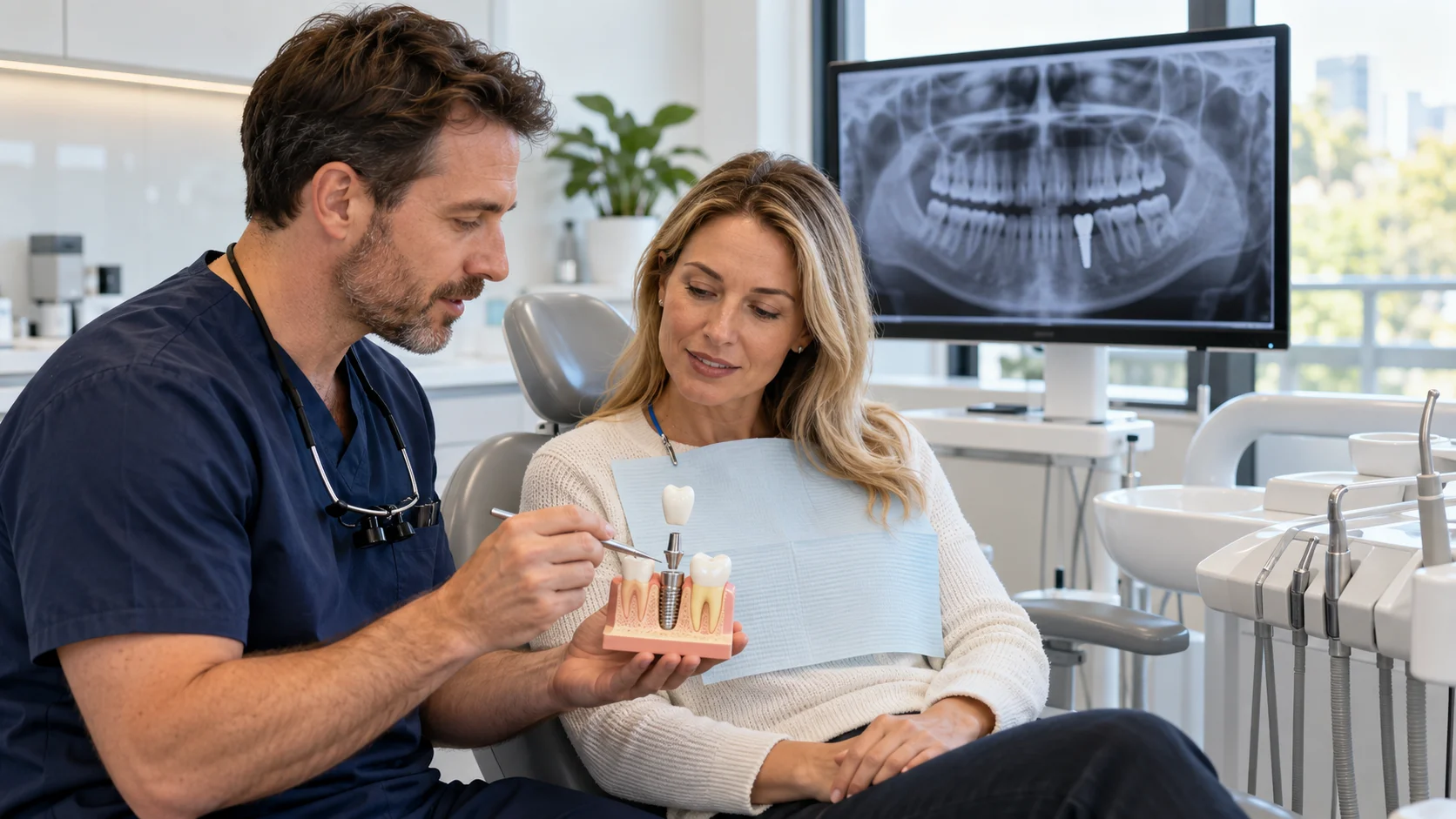

How Long After Losing a Tooth Should You Get an Implant?
Losing a tooth, whether from an accident, decay, gum disease or extraction, raises an obvious question: how soon can it be replaced?
It is a fair question. A missing tooth can affect how you chew, how your smile looks, how your bite feels and how confident you feel when speaking or eating. For some people, the gap is visible and becomes a concern quickly. For others, the missing tooth is further back, so it may be tempting to leave it alone for a while.
The answer is that it depends on your situation.
There is no single timeframe that applies to everyone. Some people may be able to have a dental implant placed on the same day a tooth is extracted. Others may need to wait several weeks or months. In some cases, additional treatment, such as a bone graft, may be needed before an implant can be considered.
At Revesby Dental Centre, we often receive questions about when to replace missing teeth. The timing matters because the condition of the gums, jawbone and surrounding teeth can influence whether dental implant treatment may be suitable and how it is planned.
If you have recently lost a tooth or are considering replacing a missing tooth, understanding the different timing options can help you prepare for a discussion with your dentist.
Here is what generally influences how long after losing a tooth you can get an implant.
Why Dental Implant Timing Is Not the Same for Everyone
Every tooth loss situation is different.
A tooth removed because of a fracture may leave a different treatment site compared with a tooth removed due to long-term infection or gum disease.
The amount of remaining bone, the health of the gums and the condition of nearby teeth can all affect when an implant may be placed.
The area also needs time to heal.
After a tooth is removed or lost, the gums and jawbone begin to change. The socket where the tooth once sat gradually heals, and the surrounding tissues settle. This healing process is normal, but it is also one of the reasons implant timing needs to be assessed carefully.
Placing an implant before the site is suitable may increase the risk of complications. On the other hand, waiting a long time without having the area checked may allow changes that make treatment more complex later.
That is why timing is not simply about counting weeks or months. It is about understanding what is happening in your mouth.
Immediate Dental Implants: Placed on the Same Day
In some cases, a dentist may be able to place an implant on the same day a tooth is extracted. This is generally called immediate implant placement.
This approach may be considered when:
- The tooth socket is suitable for implant placement.
- There is sufficient healthy bone to support the implant.
- The surrounding gum tissues are in a suitable condition.
- Any infection or inflammation can be appropriately managed.
- The implant can be positioned and stabilised safely.
For suitable patients, immediate implant placement may reduce the number of surgical appointments needed overall.
It may also shorten the time between tooth removal and implant placement.
However, immediate implant placement does not necessarily mean receiving a permanent replacement tooth on the same day. The implant still needs to integrate with the jawbone, and the timing of the final restoration depends on the individual treatment plan.
Immediate implants are not suitable for everyone.
If there is significant bone loss, uncontrolled infection, gum disease or damage around the tooth socket, your dentist may recommend allowing the area to heal first.
An assessment is necessary to determine whether immediate placement is appropriate.
Early Dental Implant Placement: A Few Weeks to a Few Months
Early implant placement generally happens after the gum tissue has had some time to heal, but before all the longer-term bone changes have occurred.
This may be anywhere from a few weeks to a few months after the tooth was removed, depending on the condition of the site and how healing progresses.
Early placement can be considered a middle-ground approach. It allows some initial healing while avoiding an unnecessarily extended delay.
This timing may be recommended when:
- The gum tissue needs time to recover after extraction.
- Inflammation or infection needs to settle.
- The dentist wants to assess early healing before placement.
- The treatment site may benefit from a short healing period.
However, early placement is not automatically better than immediate or delayed placement.
The most appropriate approach depends on the condition of the bone and gums, the position of the missing tooth and other individual factors.
Your dentist may recommend X-rays or a three-dimensional scan to assess the available bone and surrounding anatomical structures before planning treatment.
Delayed Dental Implant Placement: Several Months or Longer
Delayed dental implant placement generally involves waiting several months or longer after tooth removal.
This approach allows additional healing before implant placement and may be recommended when the area needs further treatment or preparation.
Delayed placement may be considered when there has been:
- Significant bone loss
- Gum disease requiring treatment
- Infection or inflammation that needs to be managed
- Trauma affecting the surrounding tissues
- A need for bone grafting or other preparatory procedures
Delayed placement may sound like the slower option, and it generally is. However, waiting may be appropriate when the site needs time to recover or additional treatment is necessary.
For example, if there is insufficient bone to support an implant, your dentist may discuss bone grafting before implant placement. Depending on the procedure, the grafted area may need several months to heal.
A delayed approach also allows your dentist to evaluate how the bone and gums have healed before determining whether implant treatment is suitable.
While this process can take longer, the aim is to plan treatment around the condition of the site rather than rush placement.
What Happens If You Wait Too Long to Get a Dental Implant?
The jawbone naturally changes after a tooth is lost.
When a tooth is present, forces from chewing and biting are transferred through the tooth root to the surrounding bone. Once the tooth is missing, those forces change, and the bone that previously supported the tooth can gradually reduce in volume.
This process is known as bone resorption.
It does not mean there is a strict deadline after which dental implants become impossible. Some people may still be suitable for implants many years after losing a tooth.
However, the longer a tooth has been missing, the greater the potential for changes to the bone, gums and surrounding teeth.
Bone Loss After Tooth Extraction
After tooth extraction, the jawbone around the empty socket begins to remodel.
Some reduction in bone width and height can occur as the area heals.
If there is insufficient bone to support an implant in the planned position, additional procedures, such as bone grafting, may be considered.
Whether grafting is necessary depends on the available bone, the proposed implant position and other clinical factors.
Movement of Surrounding Teeth
When a missing tooth is left unreplaced, neighbouring teeth may gradually shift or tilt towards the gap.
The tooth above or below the missing tooth may also move because it no longer has an opposing tooth to bite against.
These changes can affect the way your teeth meet and may complicate future replacement options.
Not everyone experiences the same degree of tooth movement, but it is one reason to have a missing tooth assessed rather than assume the gap can be left indefinitely without consequences.
Does Waiting Mean You Cannot Get an Implant?
Not necessarily.
Even if a tooth has been missing for several years, implant treatment may still be possible.
Your dentist will need to assess the available bone, gum health, bite and surrounding teeth to determine whether an implant can be considered.
Some patients may require preparatory treatment, while others may be suitable for implant placement without additional procedures.
The important point is that waiting does not automatically rule out dental implants, but it may influence the treatment options and overall timeline.
Replacing a Missing Tooth: What the Dental Implant Process Involves
Replacing a missing tooth with an implant generally involves several appointments and stages of treatment.
The exact process depends on your oral health, the condition of the missing tooth site and whether additional treatment is required.
According to Healthdirect Australia’s dental implant information, implant treatment usually takes place over multiple appointments and involves assessing the jawbone before placement.
The process may include the following stages.
1. Initial Dental Assessment
Your dentist examines the missing tooth area, surrounding teeth, gums and bite.
Your medical history and overall oral health are also considered to identify factors that may influence treatment suitability or healing.
2. X-rays and Treatment Planning
X-rays or three-dimensional scans may be recommended to assess the height, width and shape of the jawbone.
This information helps your dentist determine whether there is sufficient bone and plan an appropriate implant position.
If bone grafting or other preparatory treatment is needed, it may be discussed during this stage.
3. Dental Implant Placement
If treatment is considered suitable, the dental implant is surgically placed into the jawbone.
The implant is generally a small titanium or titanium-alloy post designed to support a replacement tooth.
The procedure is usually performed with local anaesthesia, although anaesthetic and sedation options may vary depending on the patient and treatment.
4. Healing and Bone Integration
After placement, the implant needs time to integrate with the surrounding bone.
This process is called osseointegration.
The healing period varies depending on factors such as bone quality, implant stability, general health and whether additional treatment was performed.
Your dentist will assess healing before deciding when the final restoration can be fitted.
5. Fitting the Final Dental Crown
Once the implant has integrated sufficiently and the site is ready, a replacement tooth can be attached.
For a single missing tooth, this is commonly an implant-supported dental crown.
The crown is designed to restore the appearance and function of the missing tooth, although the final result depends on the individual’s oral health and treatment circumstances.
How Long Does the Entire Implant Process Take?
The overall process may take several months and, in more complex cases, can approach a year or longer.
Some patients may have a relatively straightforward treatment plan, while others may need additional healing time or procedures.
The timeline can be influenced by:
- Whether the tooth has already been extracted
- The condition of the jawbone and gums
- Whether bone grafting is required
- How the implant site heals
- Whether additional dental treatment is necessary
- The timing of the final restoration
Your dentist can provide a more personalised estimate after assessing the site.
Factors That Affect How Soon You Can Get a Dental Implant
Several factors can influence when implant placement may be appropriate.
Infection or Gum Disease
If a tooth was removed because of an abscess, infection or advanced gum disease, the area may need treatment before implant placement.
The presence of infection does not always mean immediate placement is impossible, but it can affect the recommended approach.
Your dentist will consider the extent of the infection, surrounding bone and gum health before advising on timing.
Jawbone Quantity and Quality
Dental implants need sufficient bone support.
If the jawbone has become too narrow or there is significant bone loss, bone grafting or an alternative treatment plan may be discussed.
The need for additional treatment can affect when an implant may be placed.
Overall Oral Health
Untreated decay, active gum disease and inadequate plaque control may need to be addressed before implant treatment.
Maintaining healthy gums and good oral hygiene is important both during treatment and for ongoing implant maintenance.
General Health and Medical History
Some medical conditions, medications, smoking and other healing-related factors may influence implant suitability and treatment planning.
Your dentist will usually review your medical history and discuss any relevant risks before recommending treatment.
Personal Circumstances
Practical considerations may also influence your treatment timeline.
These can include work commitments, finances, recovery time and preferences regarding the available replacement options.
While these factors matter, clinical suitability should guide the timing of implant placement.
What Should You Do While Waiting for a Dental Implant?
If you are not ready for an implant immediately, or you are still deciding whether treatment is right for you, it is worth having the missing tooth area assessed.
Leaving a gap unaddressed may allow changes in the surrounding bone, teeth and bite.
However, having an assessment does not mean you must commit to implant treatment straight away.
It simply helps you understand what is happening at the site and which options may be available.
Consider Temporary Tooth Replacement Options
Depending on the position of the missing tooth and your treatment plan, a temporary replacement may be considered.
Possible options include a temporary removable denture or another provisional restoration.
Not every temporary option is appropriate for every patient, particularly while an extraction site or implant is healing.
Your dentist can explain which options may be suitable.
Maintain Good Oral Hygiene
Even when a tooth is missing, the surrounding gums and nearby teeth still need regular care.
Food and plaque can accumulate around the gap, so maintaining oral hygiene is important.
Continue brushing and cleaning between your teeth as advised. If you have recently had a tooth extracted, follow your dentist’s specific aftercare instructions to avoid disturbing the healing site.
Have the Area Checked if You Notice Problems
If you experience ongoing pain, swelling, discharge, bleeding or other concerning symptoms around the missing tooth site, arrange a dental assessment.
These symptoms may require attention, regardless of whether you are planning to have an implant.
If an adult tooth has been completely knocked out in an accident, seek urgent dental care rather than waiting for an implant consultation. In some circumstances, the natural tooth may be able to be saved.
Why a Dental Assessment Matters Before Deciding on Implant Timing
It is understandable to want a simple answer, especially if you have recently lost a tooth.
However, the appropriate timing for an implant cannot be determined from the number of weeks or months alone.
A dentist needs to consider:
- The condition of the gums and extraction site
- The amount and quality of available bone
- The position of nearby teeth
- Your bite and overall oral health
- Any infection or other clinical concerns
- Your medical history and healing factors
Scans may be recommended to provide more detailed information about the jawbone and surrounding structures.
An assessment also gives you an opportunity to discuss alternatives to implant treatment.
Depending on your circumstances, a dental bridge, removable denture or another approach may be considered.
Dental implants can be a suitable replacement option for some patients, but they are not appropriate for everyone.
The most suitable option depends on your oral health, personal goals, budget, treatment preferences and the condition of the missing tooth site.
Talk to Revesby Dental Centre About Your Tooth Replacement Options
If you have recently lost a tooth or have been living with a gap for some time, the dental team at Revesby Dental Centre can assess the area and discuss your available replacement options.
Every situation is different.
Some patients may be suitable for immediate implant placement, while others may benefit from early or delayed placement. Additional treatment, such as bone grafting or gum disease management, may be needed before an implant can be considered.
Having the area examined can help you understand what is realistic for your circumstances and whether implant treatment may be suitable.
If you live in Revesby or the surrounding suburbs, contact Revesby Dental Centre to arrange a dental assessment and discuss your options for replacing a missing tooth.
Frequently Asked Questions
Can I get a dental implant immediately after losing a tooth?
In some cases, yes. An implant may be placed on the same day a tooth is extracted if the site is suitable. This depends on factors such as the condition of the jawbone, tooth socket, gums and any infection. A dentist must assess the area before determining whether immediate implant placement is appropriate.
Is it bad to wait too long to get a dental implant?
Waiting does not automatically prevent implant treatment, but the jawbone can change after a tooth is lost. Nearby teeth may also shift towards the gap. If significant bone loss has occurred, additional treatment such as bone grafting may be needed. Having the area assessed can help you understand your options.
What is a delayed dental implant?
A delayed dental implant is placed several months or longer after tooth loss, generally after the extraction site has undergone further healing. This approach may be recommended when infection, gum disease, bone loss or other conditions need to be addressed before implant placement.
How long does the full dental implant process take?
The complete process, from initial assessment to fitting the final restoration, may take several months to around a year or longer in more complex cases. The timing depends on healing, bone availability, whether additional procedures are required and the individual treatment plan.
Do I need a bone graft before getting a dental implant?
Not always. A bone graft may be recommended if there is insufficient bone to support an implant in the planned position. Your dentist can assess the jawbone using an examination and appropriate imaging to determine whether grafting or another treatment approach may be suitable.